

Blog
Should You Sell or Refinance Your Investment Property in 2026?
Deciding where to put capital in 2026 is more complex than simply buying “real estate.” Understanding real estate asset classes 2026 and how each responds to inflation, technology, and shifting demand is what separates strategic investors from speculators.
As we move toward a more balanced market by mid‑decade, analysts from sources like the National Association of Realtors and McKinsey expect slower price appreciation but continued long‑term demand driven by demographics and limited supply in key segments. In this environment, investors are asking a crucial question: Which types of real estate asset classes will offer the best real estate investments 2026?
This guide walks through the major real estate asset classes 2026, how macro trends are reshaping them, and practical real estate investment strategies you can use to build a resilient portfolio of income producing real estate assets—whether you are just starting or already manage a sizable portfolio.
What Are Real Estate Asset Classes?
At the simplest level, real estate asset classes are categories of property that share similar economic drivers, risk profiles, and operating models. Instead of viewing property as one monolithic investment, asset classes help you compare:
How properties generate income (rents, leases, service fees, etc.)
Who the end user or tenant is (residents, businesses, logistics firms, seniors, data operators)
How sensitive the income stream is to economic cycles and interest rates
Traditional types of real estate asset classes include residential, commercial, industrial, retail, hospitality, healthcare, special purpose, and land. By 2026, these broad buckets are still relevant, but investors increasingly focus on sub‑asset classes—for example, workforce multifamily, build‑to‑rent single‑family, last‑mile logistics, or data centers—because each behaves differently under stress and opportunity.
📌 Key Takeaway: Asset classes are not just labels; they are frameworks for understanding how your property will perform across economic cycles, technology shifts, and demographic trends.
Why Asset Classes Matter in Today’s Market
As we approach 2026, several macro forces are reshaping the risk–return profile of every real estate asset class:
Inflation and Interest Rates
After the post‑pandemic surge, inflation has moderated but remains a central concern. Real estate is often viewed as an inflation hedge, but not all asset classes behave the same. Shorter lease terms—common in multifamily and some industrial—allow landlords to reset rents more frequently, keeping up with rising costs. Long‑term fixed leases, more common in office or some retail, may lag inflation for years if not structured with escalations.
Demand Shifts and Demographics
Demographic data from sources like Zillow and NAR suggest that Millennials and Gen Z will continue to drive household formation into the 2030s, while the aging Baby Boomer cohort boosts demand for healthcare and senior housing. At the same time, hybrid and remote work patterns are reshaping where people live and how businesses use space, supporting growth in suburban rentals, logistics, and digital infrastructure while challenging some traditional office and retail formats.
Technology and Digitalization
Technology is no longer a niche factor; it is core to asset performance. E‑commerce drives demand for industrial and last‑mile logistics. Cloud computing and AI increase demand for data centers and digital infrastructure. Smart‑building technology improves efficiency and tenant experience across asset classes. As McKinsey notes, real estate in 2026 will be “more digital, more flexible, and more service‑oriented” than ever before.
💡 Pro Tip: When evaluating the best real estate investments 2026, ask how each asset class benefits from or is threatened by technology, inflation, and demographic trends—not just what cap rate it offers today.
Top Real Estate Asset Classes in 2026
Among the many types of real estate asset classes, several stand out as particularly compelling income producing real estate assets heading into 2026. Below are the segments most investors should have on their radar, with benefits, risks, and tactical insights.
1. Multifamily and Workforce Housing
Why it’s trending: Persistent housing shortages in many U.S. metros, tighter mortgage affordability, and demographic tailwinds keep rental demand elevated. Workforce housing (Class B and C properties serving middle‑income renters) is especially resilient because it sits between luxury and subsidized housing—segments that can be more volatile or heavily regulated.
Key benefits: Frequent lease renewals allow rents to adjust with inflation; broad tenant base reduces vacancy risk; historically strong performance through cycles.
Risks/considerations: Rising property insurance and operating costs; local rent‑control or tenant‑protection regulations; competition from new Class A supply in some markets.
Investor insight: Focus on markets with job growth, constrained new supply, and a clear gap between rents and the cost of homeownership. Value‑add strategies—improving units and operations—can enhance yields without relying solely on market appreciation.
2. Industrial and Logistics
Why it’s trending: The continued expansion of e‑commerce, just‑in‑case inventory strategies, and reshoring of manufacturing are driving strong demand for warehouses, distribution centers, and logistics hubs. Even as growth normalizes from the explosive years of 2020–2022, structural demand remains robust.
Key benefits: Long‑term leases with credit‑worthy tenants; relatively low operating costs; strong alignment with technology and supply‑chain modernization.
Risks/considerations: Potential overbuilding in some logistics corridors; tenant concentration risk with single‑tenant facilities; sensitivity to global trade volumes.
Investor insight: Prioritize locations near major highways, ports, intermodal hubs, and large population centers. Look for properties that can accommodate automation and high‑clear heights, which will likely remain in demand as logistics becomes more tech‑driven.
3. Data Centers and Digital Infrastructure
Why it’s trending: Cloud computing, streaming, AI, and the Internet of Things require enormous and growing amounts of data storage and processing. Data centers, fiber networks, and related digital infrastructure are among the most technology‑linked real estate asset classes in 2026.
Key benefits: Long leases with institutional‑grade tenants; high switching costs for occupants; strong alignment with long‑term digitalization trends.
Risks/considerations: High capital expenditure requirements; specialized operational expertise; exposure to rapid technological change and power‑supply constraints.
Investor insight: For most individual investors, direct ownership is challenging. Consider partnering with experienced operators, private funds, or REITs specializing in digital infrastructure to gain exposure while managing operational risk.
4. Single‑Family Rentals and Build‑to‑Rent Communities
Why it’s trending: Remote and hybrid work have increased demand for more space, yards, and suburban living. At the same time, high home prices and borrowing costs keep many households renting longer. This has propelled both scattered single‑family rentals and purpose‑built build‑to‑rent (BTR) communities into the spotlight as some of the best real estate investments 2026 for investors seeking stable, long‑term tenants.
Key benefits: Strong tenant demand; longer average tenancy than apartments; potential for both cash flow and appreciation in growing metros.
Risks/considerations: Operational complexity when managing scattered sites; exposure to property‑tax increases; local regulatory changes affecting single‑family rentals.
Investor insight: For individual investors, focusing on a small cluster of homes within a defined submarket can create operational efficiencies. For larger capital, BTR projects can offer scale, professional management, and community‑level amenities that attract high‑quality tenants.
5. Senior Housing and Healthcare‑Adjacent Assets
Why it’s trending: An aging population is one of the most predictable drivers in real estate. Assisted living, independent living, memory care, and medical office buildings all stand to benefit from rising healthcare needs and longevity, making them important components of real estate asset classes 2026.
Key benefits: Demographically supported demand; potential for stable, needs‑based occupancy; alignment with public and private healthcare spending.
Risks/considerations: Highly operational businesses; labor‑cost pressures; regulatory complexity; sensitivity to local competition and quality of care.
Investor insight: Treat senior housing more like an operating business with a real estate component than a passive rental. Partnering with experienced operators or investing through specialized funds can help manage complexity while still capturing demographic upside.
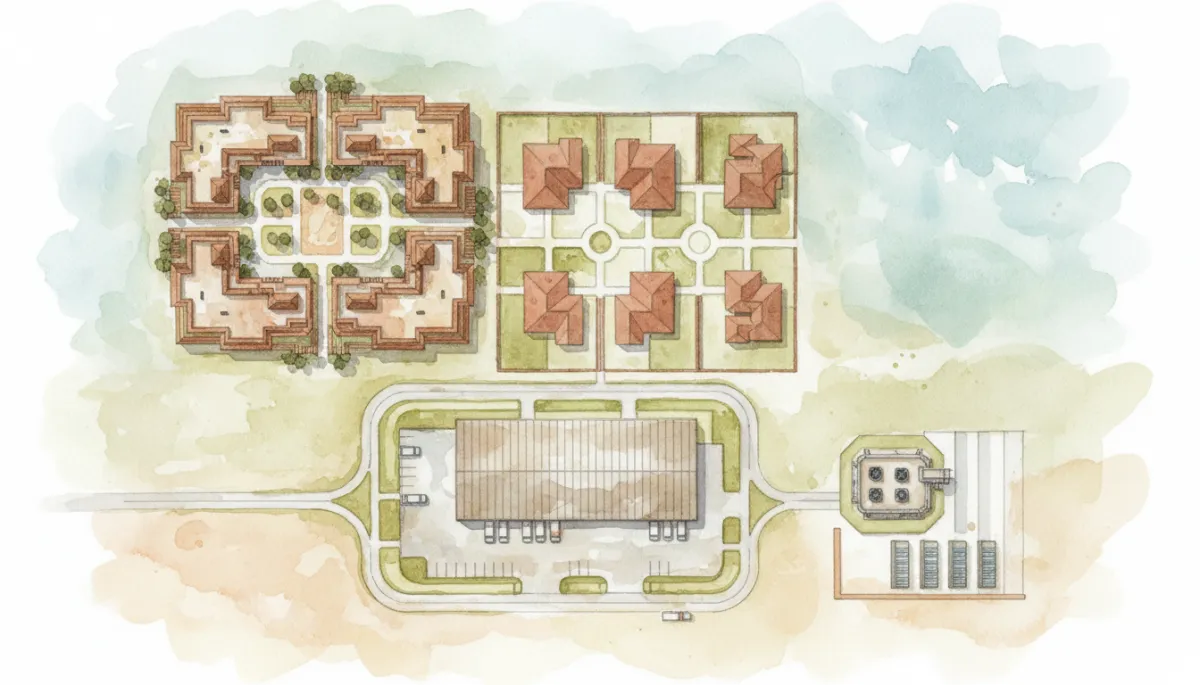
Blending several asset classes can smooth cash flow and reduce portfolio volatility.
Key Trends Shaping Real Estate Investing in 2026
Beyond individual sectors, several cross‑cutting trends are redefining real estate investment strategies across all asset classes.
From Speculation to Demand‑Driven Investing
The rapid price appreciation of 2020–2022 led many investors to chase short‑term gains, often relying on speculative underwriting and aggressive rent‑growth assumptions. As markets normalize, lenders tighten, and cap rates adjust, that playbook is far riskier.
In 2026, the emphasis is shifting toward demand‑driven investing—aligning capital with proven, durable needs: housing affordability gaps, logistics bottlenecks, aging populations, and digital infrastructure. That means focusing less on “hot markets” and more on:
Job and population growth that support long‑term occupancy
Supply constraints (zoning, construction costs, land scarcity)
Tenant quality and lease structures that protect income through cycles
Sustainability and Operational Efficiency
Investors and tenants are increasingly attentive to energy efficiency, carbon footprints, and building performance. Sustainable and “green” buildings may command rental premiums, lower operating costs, and better financing terms. This trend touches nearly all types of real estate asset classes—from multifamily retrofits to highly efficient logistics and data centers.
Professionalization and Data‑Driven Decisions
Even small investors now have access to tools once reserved for institutions: market analytics, rent‑growth forecasts, and portfolio dashboards. The most successful investors in 2026 will be those who combine local knowledge with data‑driven underwriting, stress‑testing assumptions against multiple scenarios rather than relying on best‑case projections.
📌 Key Takeaway: In 2026, edge comes from disciplined selection of real estate asset classes, rigorous underwriting, and aligning with long‑term demand—not from timing short bursts of price appreciation.
How Financing Impacts Investment Success
No discussion of the best real estate investments 2026 is complete without addressing financing. The same property can be an excellent or poor investment depending on how it is capitalized. Interest rates, leverage levels, loan terms, and speed of execution all shape your risk and returns.
Why Fast, Flexible Capital Matters
In competitive segments such as multifamily, industrial, or build‑to‑rent, strong deals rarely sit on the market. Sellers and brokers favor buyers who can close reliably and quickly. That is where working with a lender that understands real estate investors—not just owner‑occupants—can be a strategic advantage.
RP Capital Lending, for example, focuses on providing investors with fast, flexible financing solutions tailored to income producing real estate assets. By aligning loan structures with the specific real estate asset classes you are targeting, they help investors:
Move quickly on time‑sensitive opportunities, such as value‑add multifamily or off‑market single‑family portfolios
Match loan terms to business plans—short‑term bridge for repositioning, longer‑term debt for stabilized cash‑flow assets
Optimize leverage to balance cash‑on‑cash returns with resilience during rate or market shifts
💡 Pro Tip: Treat your lender as part of your investment team. Share your real estate investment strategies, target markets, and asset classes so they can structure financing that supports your long‑term goals rather than just closing a single transaction.
Financing by Asset Class: Practical Considerations
Multifamily/workforce housing: Often financeable with agency, bank, or specialized multifamily lenders. Underwriting focuses heavily on in‑place income, expenses, and value‑add potential.
Industrial/logistics: Lenders scrutinize tenant credit quality, lease length, and location strength. Longer leases may support attractive fixed‑rate terms.
Single‑family rentals/BTR: Portfolio loans and DSCR (Debt Service Coverage Ratio) products are common, allowing investors to scale beyond traditional consumer mortgages.
Senior housing and specialized assets: Often require lenders with niche expertise due to operational risk and regulatory considerations.
The common thread: the stronger and more predictable your income stream, the more financing options you will typically have—and the better terms you can command. That is another reason why choosing the right real estate asset classes 2026 is foundational to long‑term success.
Putting It All Together: Strategic Investing in 2026
With so many options, how should investors—new and experienced—approach real estate asset classes in 2026? A few guiding principles can help you build a resilient, opportunity‑ready portfolio:
Start with your goals and risk tolerance. Are you seeking steady cash flow, long‑term appreciation, or opportunistic upside? Multifamily and single‑family rentals may suit income‑oriented investors, while value‑add industrial or BTR developments might appeal to those comfortable with higher execution risk.
Align with durable demand drivers. Focus on asset classes supported by demographics (housing, senior living), technology (industrial, data centers), or structural shortages (workforce housing in supply‑constrained markets).
Diversify intelligently. You do not need exposure to every sector, but blending two or three complementary real estate asset classes can smooth returns. For example, pairing workforce multifamily with a small allocation to industrial or digital infrastructure can reduce reliance on a single tenant base or economic driver.
Underwrite conservatively. Use realistic rent‑growth assumptions, stress‑test interest rates, and build in reserves for capital expenditures. In a world of shifting inflation and borrowing costs, margin of safety is a key part of every successful real estate investment strategy.
Secure strategic financing. Work with lenders like RP Capital Lending who understand investor needs, can move quickly, and tailor loan structures to your business plan and chosen asset classes.
Conclusion: Choose Asset Classes That Work as Hard as You Do
Real estate in 2026 will not be defined by a single “hot” sector or one‑size‑fits‑all playbook. Instead, the investors who thrive will be those who understand how different real estate asset classes behave under the pressures of inflation, technology, and demographic change—and then position their capital accordingly.
Multifamily and workforce housing, industrial and logistics, data centers, single‑family rentals, and senior housing all offer compelling opportunities, but each comes with distinct benefits and risks. By focusing on demand‑driven investing, using data‑informed underwriting, and partnering with experienced lenders such as RP Capital Lending, you can assemble a portfolio of income producing real estate assets designed to perform—not just in 2026, but across the next cycle and beyond.
The next step is yours: clarify your objectives, choose the asset classes that best align with your strategy, and build a financing plan that lets you act decisively when the right opportunity appears. In a market where capital and information move quickly, intentional, well‑researched decisions are your most powerful advantage.


RP Capital Lending is a d.b.a of RP Capital Partners Inc (NMLS # 2469193)
Disclaimer: Loans only apply to non-owner occupied properties. Rates, terms and conditions offered only to qualified borrowers, may vary upon loan product, deal structure, other applicable considerations, and are subject to change at any time without notice.
Copyright © 2025. All Rights Reserved.